Sometimes Satirical. Sometimes Serious.
Sometimes Stupid. Always WTF.
We explore absurdity, question authority, and celebrate contradiction — through content, commentary, and the kind of nonsense that accidentally makes a point.
Welcome to OMGWTF:
The umbrella brand for the world’s most unnecessary truths.
Official updates from the most unofficial brand on the internet. From corporate chaos and creative launches to fake memos and real commentary — these are the dispatches from OMGWTF.ltd Expect sharp takes, stupid ideas, and the occasional moment of clarity (by accident, mostly).
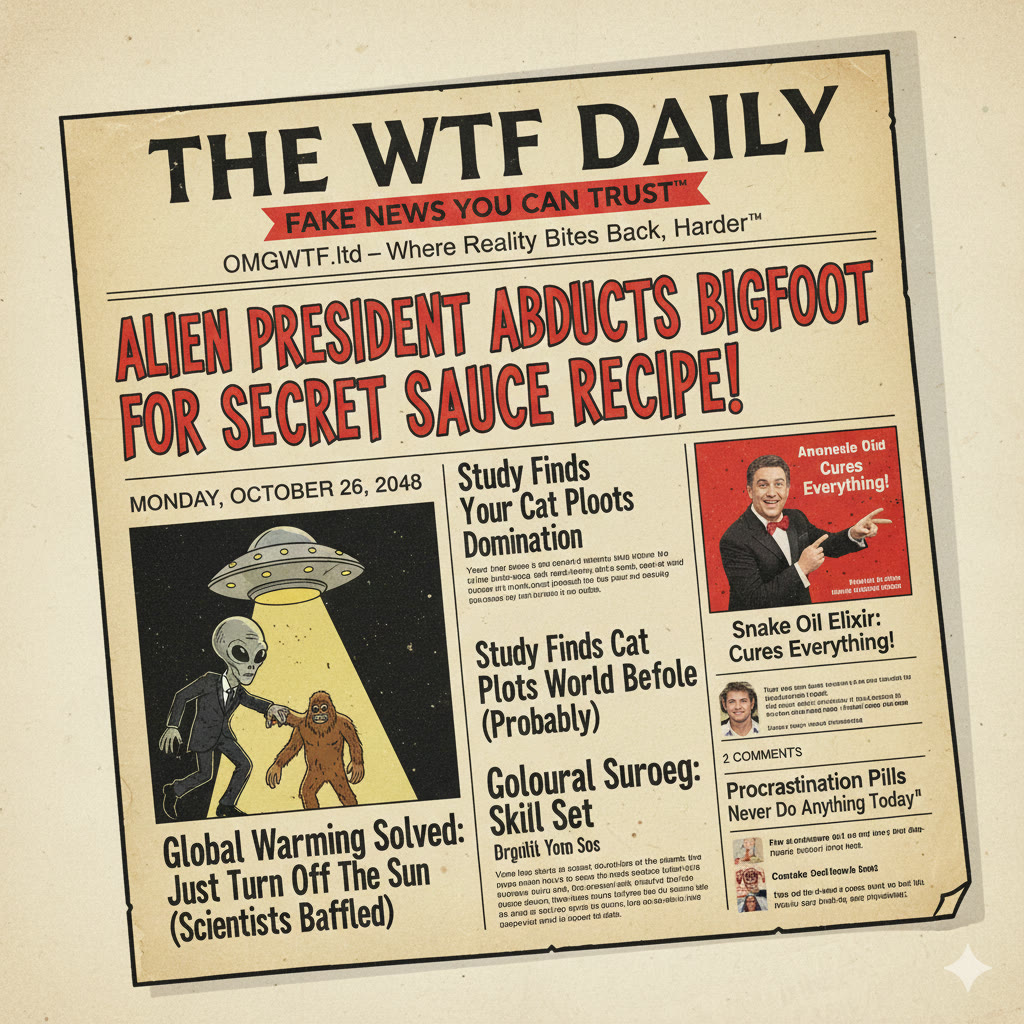
Why This Blog Exists... Someone recently asked us a genuinely brilliant question: “How do you define a WTF?” And honestly? It was so good — so perfectly on-brand — that we stopped what we were doing, stared into the middle distance, and said: “Yeah… this deserves a full blog.” So here it is: Our official, overly detailed, unnecessarily scientific, unapologetically ridiculous answer to one of the most important questions in modern human existence.
Where human behaviour gets analysed, diagnosed, and occasionally roasted. We take psychology, identity, ideology, and belief-driven chaos and translate it into something normal humans can understand. Prefer raw data and 30-page studies? We publish those too — because someone out there enjoys academic suffering. If you’ve ever wondered why people act like logic is optional, this is your new home.
The official feed of daily chaos, questionable news, and cultural contradictions. WTFNow dives headfirst into the absurdity of modern life — spotlighting everything from bizarre headlines and online disasters to historic moments you were never meant to believe. Whether it’s satire, truth, or something in between, we’re here to make you laugh, wince, and mutter “What the actual f—?”
Uncomfortable facts, inconvenient truths, and the stories that slipped through the cracks — uncovered by an unfiltered, home-built AI with no corporate leash, and a bad attitude. At Unintended Truth, we don't polish headlines. We dig, dissect, and drop the facts others avoid. Powered by tech that doesn’t care about staying politically safe or brand-friendly, we expose what gets buried — and let the truth speak for itself.


The cURL project — one of the internet’s quiet workhorses — has ended its bug bounty after being swamped with low-quality, often AI-generated “security reports” that waste maintainer time and drain morale. In true WTFNow fashion, we look at the bigger irony: AI wasn’t used to reduce workload… it created a fresh tsunami of noise, turning incentives into a spam engine. Here’s what happened, why it matters, and why “verification” is becoming the most expensive human skill online.
Unfinished tasks don’t just sit there — they haunt. This post tells the origin story of the Zeigarnik effect, sparked by Bluma Zeigarnik watching a waiter recall every active order without writing a thing down… then forget her the moment the table was “closed.” From that café moment to her 1927 experiments, we trace why “open loops” stay mentally alive — and why closure is the only thing that makes your brain finally let go.
Official updates from the most unofficial brand on the internet. From corporate chaos and creative launches to fake memos and real commentary — these are the dispatches from OMGWTF.ltd Expect sharp takes, stupid ideas, and the occasional moment of clarity (by accident, mostly).
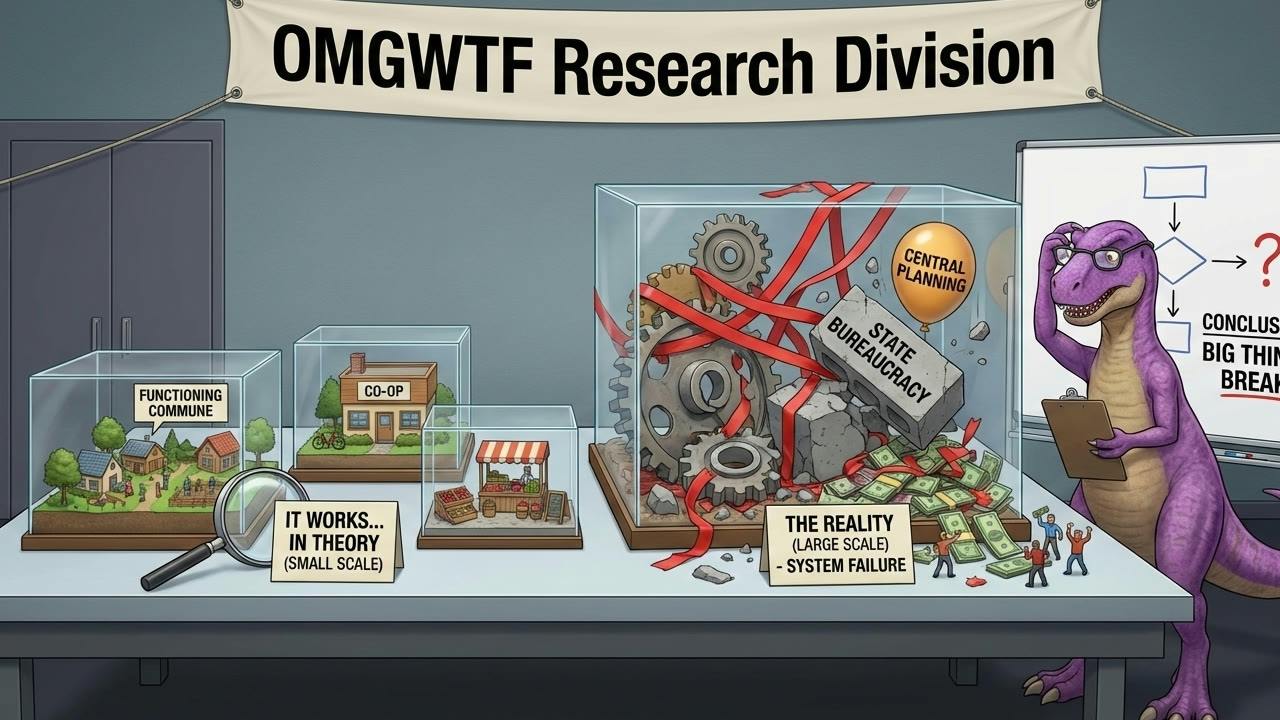
Why does communism work at home but fall apart at scale? Why does socialism thrive in communities but buckle under bureaucracy? Why does capitalism coordinate millions of strangers… and then eat itself? This piece breaks down The Scale Illusion — the overlooked reason every economic system works beautifully in the right context and fails spectacularly in the wrong one.
This interdisciplinary study examines why communism, socialism, and capitalism each function effectively under specific conditions, yet consistently fail when applied beyond their optimal scale. Drawing on evolutionary psychology, political psychology, behavioural economics, and sociology, the paper introduces scale as a central explanatory variable in economic system performance. It demonstrates how human cognitive limits, social trust mechanisms, and enforcement capacities shape the success and breakdown of economic arrangements across micro, meso, and macro levels of organisation.
Why This Blog Exists... Someone recently asked us a genuinely brilliant question: “How do you define a WTF?” And honestly? It was so good — so perfectly on-brand — that we stopped what we were doing, stared into the middle distance, and said: “Yeah… this deserves a full blog.” So here it is: Our official, overly detailed, unnecessarily scientific, unapologetically ridiculous answer to one of the most important questions in modern human existence.
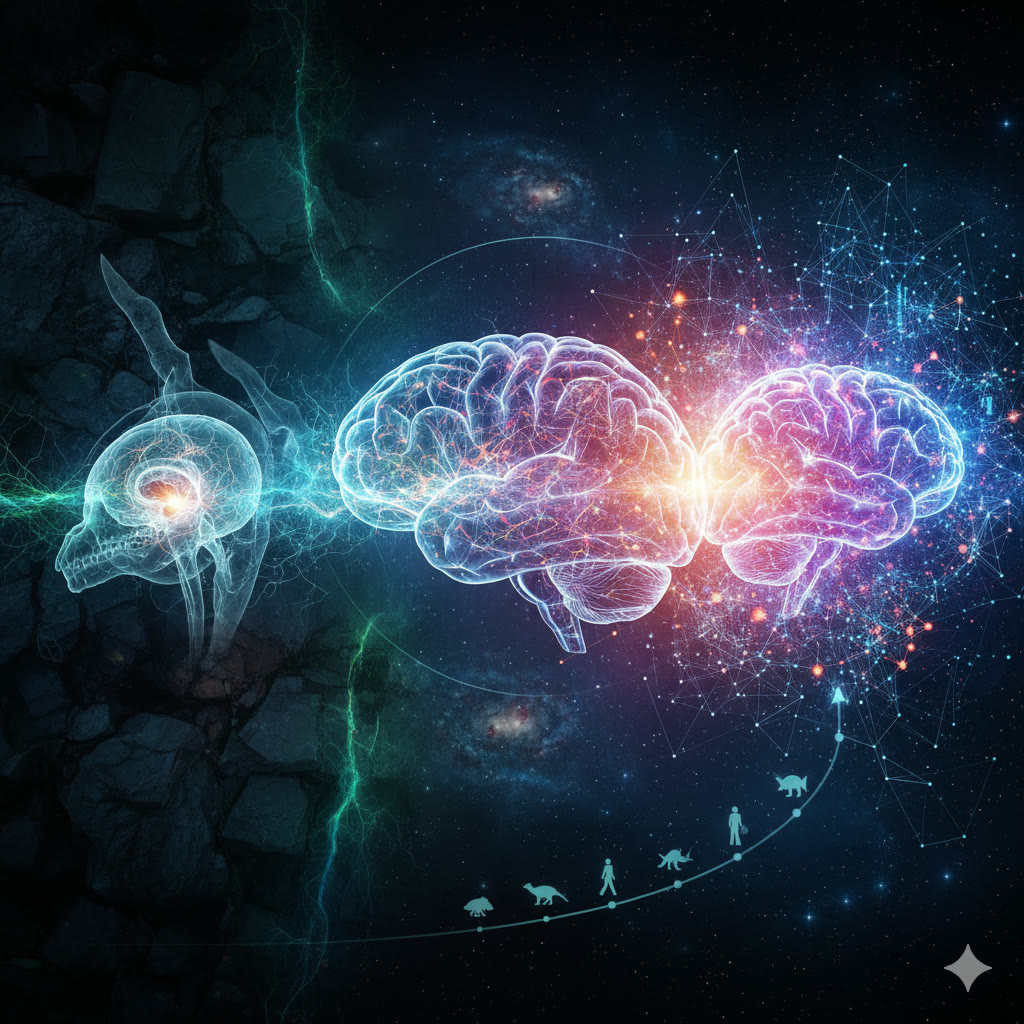
Human cognition didn’t just “appear.” It evolved, mutated, improvised, fell over, got back up, panicked, adapted, and eventually became the thing that: survives predators, builds empires, invents TikTok, argues on Facebook, and questions its own existence while eating crisps at 2am. This study dives into how evolution, neurology, childhood development, AND culture all teamed up to turn Homo erectus into Homo sapiens into… whatever we are today. Let’s break it down OMGWTF style.
This interdisciplinary study delves into the evolution of human cognition, exploring the interconnected roles of evolutionary psychology, neurology, developmental psychology, and epistemology. It highlights how adaptive traits shaped by evolution are expressed and refined through neurological development, environmental interactions, and cultural contexts. By examining universal cognitive mechanisms and their culturally specific manifestations, the research offers valuable insights into the dynamics of learning, reasoning, and knowledge formation.

We all know exercise is “good for you.” Blah blah heart health, blah blah weight, blah blah “summer body.” Cool. But here’s the real plot twist: 👉 Exercise isn’t just about your body. It’s one of the strongest evidence-backed ways to stop your brain from turning into badly organised porridge as you age. We’re not talking about fitness influencers shouting “no excuses” into their ring lights. We’re talking hard data: 30 high-quality studies, 15,200 people, decades of follow-up, brain scans, blood markers, and actual cognitive tests.
This meta-analysis delves into the powerful link between physical fitness and cognitive health, examining how exercise can serve as a protective factor against cognitive decline and neurodegenerative diseases. By analysing 30 high-quality studies, the research highlights the role of exercise intensity, type, and long-term engagement in improving memory, executive function, and overall cognitive resilience. It explores the neuroprotective mechanisms behind these benefits, including increased brain-derived neurotrophic factor (BDNF), reduced neuroinflammation, and enhanced vascular health.

Have you ever tried explaining something simple to someone who swears they’re “all about facts,” only to watch their brain turn into Windows 95? You bring receipts. They bring vibes. You show evidence. They respond with: “Well… that’s just what they want you to think.” Congratulations — you’ve collided with the psychological equivalent of a brick wall wrapped in feelings. Let’s break down the science of why this happens, OMGWTF style.

This review integrates findings from 118 studies to identify the psychological mechanisms underlying political activism. Results show that activist engagement arises from a combination of compassion-oriented traits, moralised identity, intuitive and identity-protective cognition, heightened emotional reactivity, and strong group reinforcement. The paper presents a unified model explaining why activist beliefs persist, how they form, and the psychological benefits and costs associated with sustained moralised political action.
Where human behaviour gets analysed, diagnosed, and occasionally roasted. We take psychology, identity, ideology, and belief-driven chaos and translate it into something normal humans can understand. Prefer raw data and 30-page studies? We publish those too — because someone out there enjoys academic suffering. If you’ve ever wondered why people act like logic is optional, this is your new home.
The official feed of daily chaos, questionable news, and cultural contradictions. WTFNow dives headfirst into the absurdity of modern life — spotlighting everything from bizarre headlines and online disasters to historic moments you were never meant to believe. Whether it’s satire, truth, or something in between, we’re here to make you laugh, wince, and mutter “What the actual f—?”
Uncomfortable facts, inconvenient truths, and the stories that slipped through the cracks — uncovered by an unfiltered, home-built AI with no corporate leash, and a bad attitude. At Unintended Truth, we don't polish headlines. We dig, dissect, and drop the facts others avoid. Powered by tech that doesn’t care about staying politically safe or brand-friendly, we expose what gets buried — and let the truth speak for itself.

In 1938, a young Orson Welles read a dramatic radio adaptation of The War of the Worlds — and listeners across America freaked out. The broadcast, done in a breaking-news format, convinced thousands that Earth was actually under Martian attack. People flooded police stations, fled towns, and some even armed themselves to fight the invasion. It was mass panic caused by fictional aliens on the radio. This post dives into how it happened, who believed it, and why it remains one of the greatest unintentional pranks in history.

As weight loss drugs like Ozempic and Wegovy explode in popularity, more people are turning to pills and injections as a shortcut to slimness — often without understanding what they’re actually taking. This post explores the strange logic behind “eating something to stop eating,” the flawed mindset of medicating hunger, and the outdated reliance on a 2,000-calorie Recommended Daily Allowance (which was never really average to begin with). A critical and witty look at diet culture, false shortcuts, and why sustainable weight loss still starts with knowledge — not prescriptions.

In 1951, the quiet French town of Pont-Saint-Esprit descended into absolute madness. Dozens of people experienced wild hallucinations, seizures, and full-blown psychotic breaks after eating bread from a local bakery. One man thought snakes were eating his brain; another jumped out a window shouting “I am a plane.” For decades, officials blamed tainted grain — until declassified CIA documents suggested this may have been part of MK-Ultra, the U.S. government’s secret mind control programme. That’s right: the townspeople may have been unknowingly dosed with LSD as part of a human experiment.

In both 1934 and 1945, Chile made international headlines for deadly mine collapses… that didn’t actually happen. Local officials announced rescue missions, grieving families gathered, and newspapers printed tragic updates — only for the “trapped” miners to casually walk out unharmed. It was chaos caused by false alarms, bad communication, and a lot of jumping to conclusions. This post explores how two fake disasters caused real emotional fallout, mass confusion, and the kind of accidental drama that feels ripped from a satire. You really can’t make this stuff up — but someone clearly did.
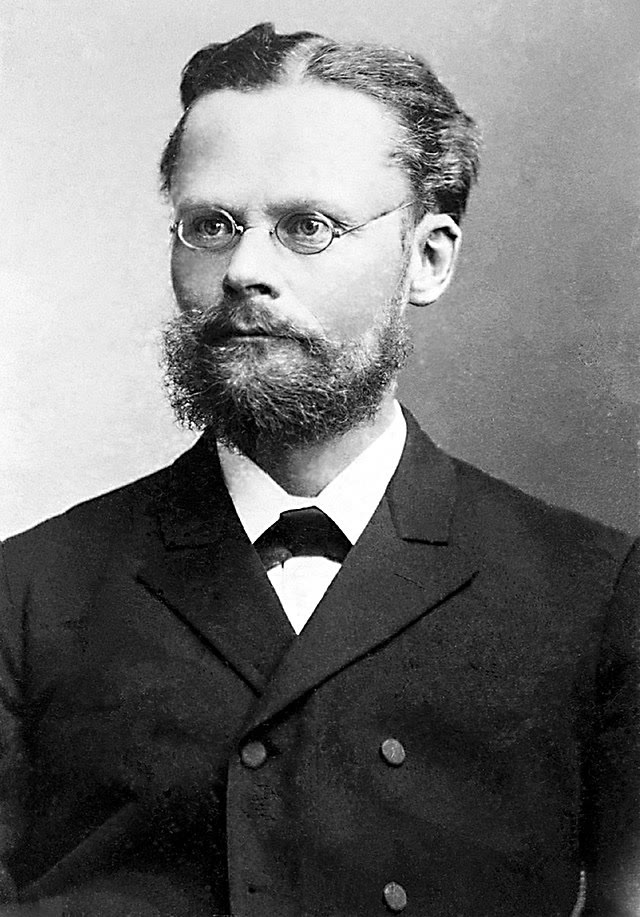
In 1920s London, self-proclaimed healer William Herrmann claimed he could cure cancer and other diseases using “psychic surgery” — reaching into people’s bodies with his bare hands to remove tumors, all without leaving a mark. Thousands bought it. The only problem? It was all fake. Herrmann used sleight of hand and animal organs hidden in his sleeves to trick audiences in what became one of the UK’s earliest and weirdest public health scams. This post breaks down the rise, the scandal, and how he turned faith into theatre — until the cops showed up.

It’s the quietest win in motorsport history. At the British Drag Racing Championship final at Santa Pod, Dutch driver Michel Tooren took home the trophy… because literally no one else turned up to race. Both finalists failed to appear, so Tooren coasted to victory with zero competition on the track. It’s part triumph, part awkward solo parade lap — and full-on WTF. In a sport known for speed, this one was won by simply being present. Sometimes, showing up really is half the battle.

A flight from Luton to Glasgow took a chaotic turn when a passenger burst out of the toilet shouting “I’ve got a bomb” and referencing Donald Trump. Cue full-blown panic, emergency landing prep — and a bunch of other passengers tackling him and literally sitting on him until police arrived. No bomb was found, no one was harmed, and the whole thing felt like the most unhinged group trust fall in aviation history. We break down what happened, what passengers said, and why budget flights never disappoint in the drama department.
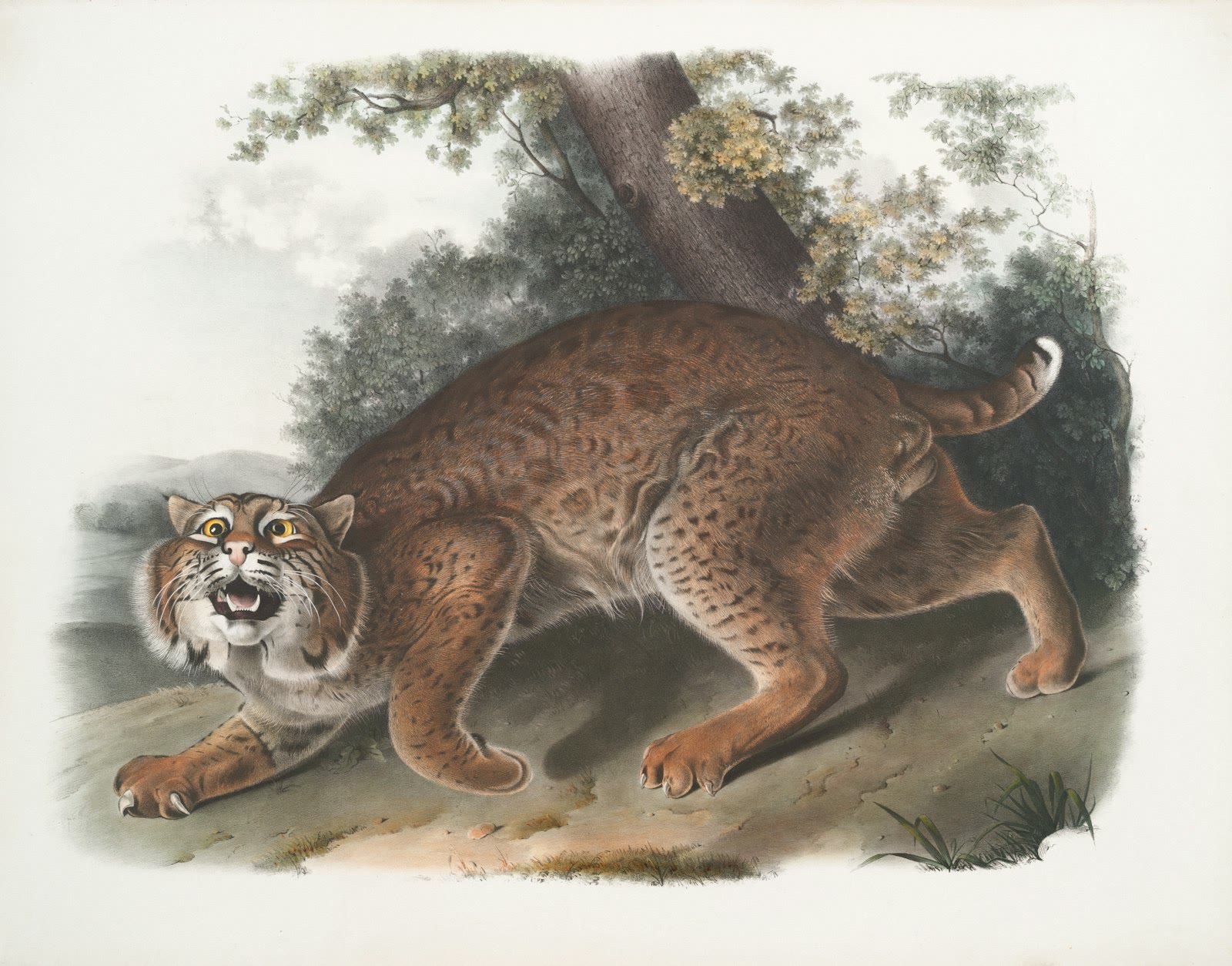
Wallasey residents are being stalked — not by a wild animal, but by a bloke in a full-body black cat suit. Dubbed “Pantherman,” this prowling prankster has been creeping through the streets at night, growling, sliding under fences, and meowing at strangers. Locals are understandably freaked, while the internet can’t decide if he’s terrifying or auditioning for Cats 2. This post dives into one of the UK’s weirdest recent sightings, complete with social media reactions and a few serious “what the actual f***” moments. Only in Britain, right?
During WWII, the British government launched a top-secret operation called Operation Fish, where they staged fake air raids and chaos across London — just to sneak the UK’s gold reserves and royal treasures to Canada. Because apparently, hiding the crown jewels is best done during actual war… by faking more war. This post uncovers the absurdity of the plan, the risks involved, and how it all played out like a wartime heist movie nobody asked for.
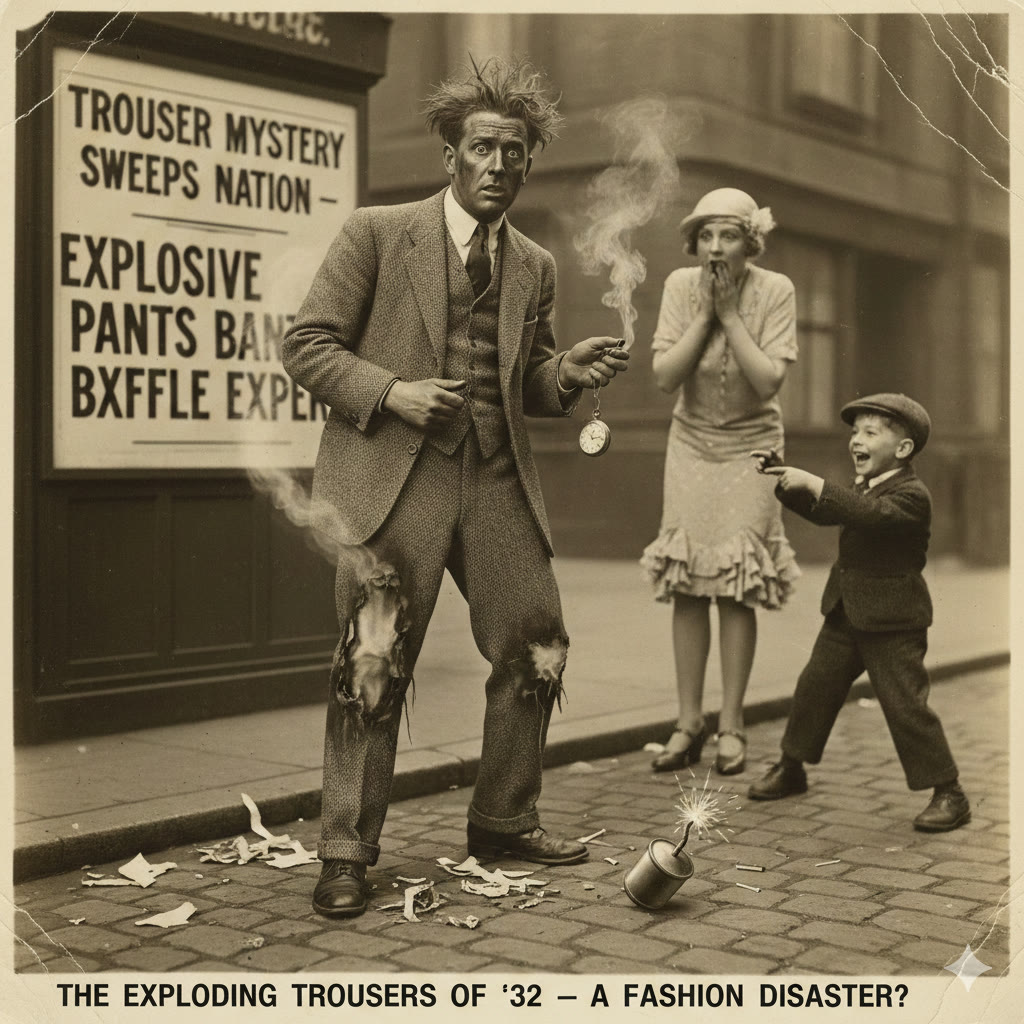
Yes, exploding trousers were a real problem. In 1930s New Zealand, farmers unknowingly created wearable fire hazards by applying sodium chlorate to kill weeds. Spoiler: it didn’t just kill weeds — it made cotton pants go boom. This post breaks down how a nation accidentally invented self-destructing legwear, and what it says about early agricultural science (and terrible product testing). Just don’t try this at home.

Forget the axe-wielding savages you’ve seen on screen — the real Vikings were clean, stylish, and incredibly well-groomed. This post explores the hilarious truth behind Viking hygiene, from weekly baths and fancy combs to guyliner that would make an influencer weep. Turns out, the original Norsemen were less “mud and blood” and more “Nordic spa day.” The past just got way hotter (and cleaner).

In 897 AD, Pope Stephen VI did what any reasonable religious leader absolutely wouldn’t: he dug up a dead pope, dressed him in robes, propped him on a throne, and put him on trial. Yes, seriously. This post dives into the Cadaver Synod — one of the most unhinged events in papal history — with a mix of disbelief, dry humour, and WTF-level absurdity. It’s a corpse, a courtroom, and a full-blown medieval meltdown. Welcome to church politics, 9th-century style.